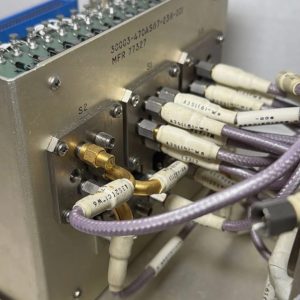
The Aviation Switching Module – NSN 4920-01-250-2696 (AS-IS / Untested) combines recognizable aviation hardware, an identifiable National Stock Number, potential electrical-control functionality, and commercial value for informed specialist buyers.
An Aircraft Switching Module may control, route, select, isolate, or distribute compatible electrical signals or circuits, while an Aerospace Switching Module should be evaluated according to its exact internal design and intended equipment relationship.
Every Aircraft Power Switching Module or Aircraft Signal Switching Module should be assessed individually because connectors, voltage, current, control logic, and system compatibility can vary significantly.
The Aviation Control Module may be associated with a larger Aircraft Electronic Switching System, while the Aerospace Switching Unit and Aircraft Electrical Module should be inspected before connection or installation.
Identifying the Aerospace Switching Unit
A matching NSN can improve identification, but it does not establish present condition, functional status, completeness, or suitability for a particular aircraft or test system.
Military or aviation-surplus components may carry replacement numbers, superseded numbers, modification markings, or contract identifiers that assist research.
Untested Switching Module Condition
The buyer should plan for professional inspection, troubleshooting, repair, parts replacement, or display-only use.
An untested component should not be connected directly to aircraft wiring, expensive test equipment, batteries, laboratory supplies, or unknown power sources.
Choosing an Aircraft Switching Module
A module used with maintenance equipment may function differently from one installed onboard an aircraft.
Switch movement can be checked gently for obvious binding or damage, but mechanical movement does not establish electrical operation.
Aerospace Enclosure and Connector Condition
The enclosure should be inspected for dents, cracks, corrosion, missing screws, altered holes, broken seals, and unauthorized repairs.
Protective caps should remain installed during storage and shipping when available.
Aircraft Electrical Hardware Review
Discoloration near connectors or switches may indicate electrical heat, chemical exposure, or ordinary aging and should be investigated.
If the enclosure is opened for professional inspection, the process should be documented with photographs and organized hardware control.
Aircraft Electrical Control Applications
The module may interact with relays, switches, indicators, sensors, power sources, test connections, or other control equipment.
Missing labels or faded markings can make operation difficult and may increase the risk of improper testing.
Power Switching Module Inspection
A switch that moves normally may still contain burned, corroded, welded, or high-resistance electrical contacts.
Missing covers or barriers may expose conductive points and increase handling read more risk.
Aerospace Module Troubleshooting
Its internal design may include electromechanical components, solid-state devices, wiring assemblies, circuit protection, or specialized connectors.
A common-looking relay, switch, resistor, connector, or wire may not be an acceptable substitute.
Aviation Signal Routing Equipment
Qualified evaluation supports responsible Aircraft Signal Switching Module use.
Original cable assemblies may add significant value when included.
Choosing an Aviation Control Module
Associated wiring, power supplies, interfaces, switches, displays, sensors, test sets, or aircraft equipment may be required for meaningful operation.
Every marking should be recorded before purchase or installation planning.
Commercial Value of an Untested Switching Unit
A complete but untested unit may have different value from an incomplete component known to contain damage.
Removable demonstration leads or external training fixtures may preserve originality better than permanent alteration.
Aerospace Circuit Management
A module should not be loaded electrically until contact condition, insulation, wiring, and circuit configuration are understood.
Bent brackets, enlarged holes, missing fasteners, or distorted mounting surfaces may complicate restoration.
Maintaining Legacy Aviation Control Equipment
The unit should be photographed before and after any preservation work.
Limited testing should not be described as complete serviceability verification.
Untested Aviation Power Equipment
Broad market keywords can support discovery while the technical description remains precise.
Safe handling is important even when the Aviation Power Control Module is sold strictly AS-IS.
Aviation Switching System Troubleshooting
An Aircraft Electronic Switching System may consist of multiple modules, harnesses, control panels, relays, indicators, power sources, and associated equipment.
Intermittent switching problems can result from worn contacts, damaged connectors, corrosion, weak relays, cracked solder joints, unstable power, or harness faults.
Protecting an Aerospace Switching Unit
Desiccant or moisture-control materials should not contact electrical components directly unless appropriate.
Loose accessories should be wrapped separately and inventoried before packaging.
Commercial Inspection of an Electrical Module
A buyer seeking an operational replacement has different needs from a collector, technical school, parts dealer, or restoration specialist.
The seller should explain whether the unit has been powered, opened, repaired, modified, tested, or removed from known equipment.
NSN 4920-01-250-2696 Buying Checklist
The buyer should request enough information for an aviation electronics technician, aerospace-equipment specialist, or experienced surplus buyer to evaluate the unit.
- Request photographs of all labels, switches, controls, connectors, mounting points, enclosure surfaces, seals, fasteners, and included accessories.
- Inspect switches, knobs, indicators, connectors, pins, wiring, and terminals for damage, looseness, contamination, overheating, or unauthorized repair.
- Report shipping damage, missing accessories, identification differences, undisclosed repairs, or altered condition promptly.
Testing the Aviation Switching Module
A qualified technician may use controlled and current-limited equipment appropriate to the module design.
Initial evaluation may include mechanical switch checks, continuity testing, insulation inspection, resistance measurements, and examination for shorts or damaged components.
Restoring the Aerospace Switching Module
Restoration should begin with condition documentation, careful cleaning, technical research, component identification, fault isolation, and repair planning.
A repaired module may still require system-level testing or additional qualification before installation.
Final Thoughts on the Untested Aircraft Switching Module
When responsibly inspected, stored, tested, repaired, and documented, the Aviation Switching Module – NSN 4920-01-250-2696 (AS-IS / Untested) can remain a valuable aerospace electrical component.
The strongest buying decision begins with confirming the NSN, manufacturer, part number, serial number, configuration, connector layout, condition, storage history, modification status, included equipment, and intended use.
Whether customers search for an Aircraft Electronic Switching System, Aerospace Switching Unit, or Aircraft Electrical Module, broad terminology should not replace technical application research.
With prompt attention to switches, connectors, wiring, enclosure condition, corrosion, labels, and internal components, the module can preserve its technical and commercial potential.